Solar Inverters Explained: On-Grid, Off-Grid & Hybrid Systems in Sri Lanka
In Sri Lanka, where electricity bills continue to rise and power outages remain a reality, solar inverters have become the heart of every reliable solar power system. Whether you want to slash your CEB bill, achieve energy independence, or prepare for future blackouts, understanding solar inverters is the first step toward smart, sustainable energy.
St. Anthony’s Solar, one of Sri Lanka’s most trusted solar power providers, has helped thousands of homes and businesses switch to clean energy with expertly designed on-grid, off-grid, and hybrid solar inverter systems. In this comprehensive 2026 guide, we break down everything you need to know about solar inverters in the Sri Lankan context – from how they work to which type suits your needs best.
What Is a Solar Inverter and Why Does It Matter in Sri Lanka?
A solar inverter is the “brain” of any solar power system. Solar panels generate direct current (DC) electricity, but Sri Lankan homes and businesses run on alternating current (AC). The inverter converts DC into usable AC power while also performing critical tasks like maximum power point tracking (MPPT), voltage regulation, and grid synchronization.
In Sri Lanka’s tropical climate with high solar irradiance (average 5-6 peak sun hours daily), a high-efficiency solar inverter can deliver up to 98.7% conversion efficiency. Modern inverters also include smart monitoring via mobile apps, anti-islanding protection required by CEB, and surge protection against lightning – vital in our island nation.
Without the right solar inverter, even the best solar panels underperform. Choosing the correct type determines your payback period, reliability during outages, and long-term savings.
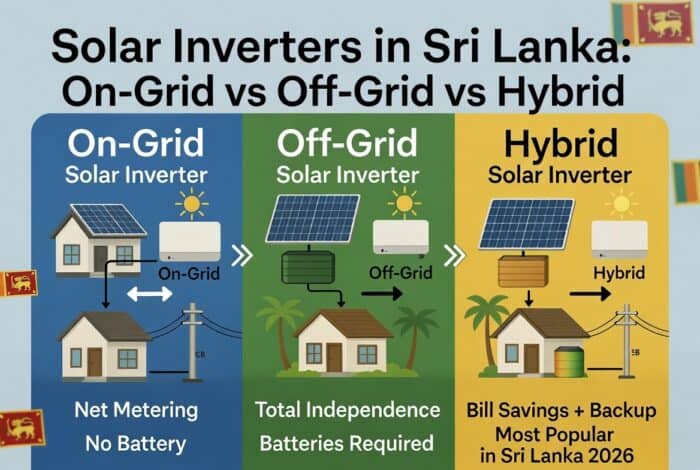
The Three Main Types of Solar Inverters: On-Grid, Off-Grid & Hybrid
1. On-Grid Solar Inverters (Grid-Tied)
On-grid solar inverters connect directly to the Ceylon Electricity Board (CEB) or Lanka Electricity Company (LECO) grid. They are the most popular and cost-effective choice in Sri Lanka today.
How it works:
Solar panels → DC power → On-grid inverter → AC power for your home + excess fed to the national grid via net metering.
Key features in Sri Lanka:
- Supports Net Metering, Net Accounting, and Net Plus schemes
- Excess units credited or paid at LKR 37/unit (2026 rates)
- No batteries required → lowest upfront cost
- 5-year average payback period (as promoted by St. Anthony’s Solar)
Pros:
- Cheapest installation
- Zero electricity bill possible
- Easy CEB approval process
- High efficiency (98.2-98.7%)
Cons:
- No power during grid outages (inverter shuts down for safety)
- Fully dependent on grid stability
Perfect for: Urban homes and businesses in Colombo, Kandy, Galle, and other grid-stable areas with high daytime consumption.
2. Off-Grid Solar Inverters (Standalone)
Off-grid solar inverters operate completely independently of the national grid – ideal for remote locations, estates, or areas with unreliable electricity.
How it works:
Solar panels → Charge controller → Batteries → Off-grid inverter → AC power for loads. No grid connection at all.
Pros:
- Total energy independence
- Works anywhere in Sri Lanka (even deep rural or island locations)
- No CEB approval needed
Cons:
- Requires large battery bank (expensive)
- Higher maintenance
- Limited power during prolonged cloudy weather
Best suited for: Farmhouses, mountain resorts, telecom towers, or off-grid communities in the North, East, or Central hills.
3. Hybrid Solar Inverters (The Smart Choice for 2026)
Hybrid solar inverters combine the best of on-grid and off-grid systems. They are rapidly becoming Sri Lanka’s favourite due to frequent power cuts and rising peak tariffs.
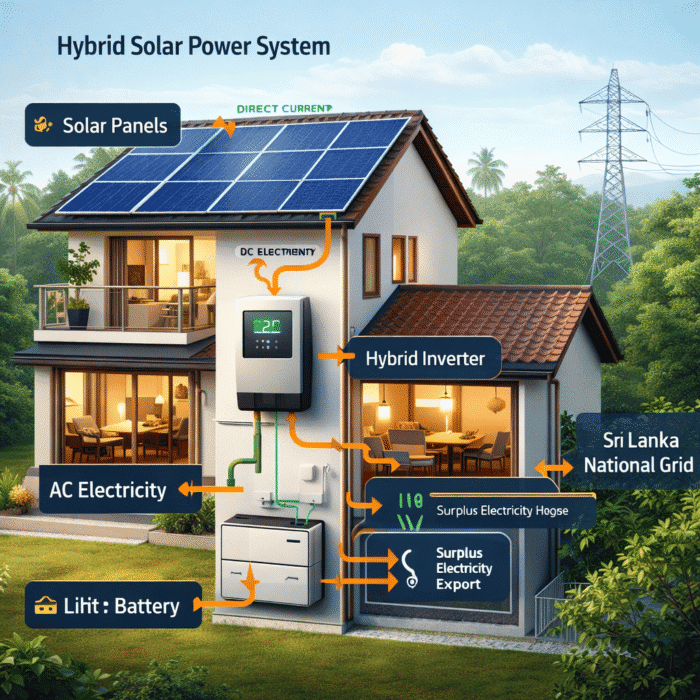
How it works:
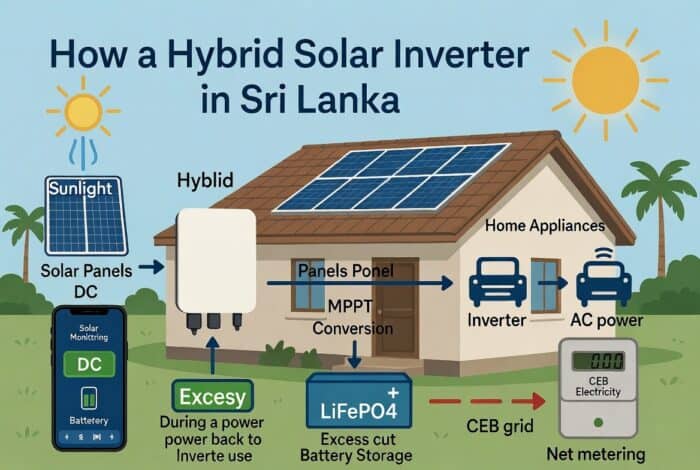
Solar panels feed the hybrid inverter, which simultaneously:
- Powers your home
- Charges batteries
- Exports excess to the CEB grid (when available)
- Switches to battery backup in <20 milliseconds during outages
Key advantages in Sri Lanka:
- Seamless backup during CEB blackouts
- Battery-ready (plug-and-play with LiFePO4 batteries)
- Smart load management and time-of-use optimization
- Full net metering + backup capability
Popular models used by St. Anthony’s Solar:
- Austrian-made hybrid inverters (97.6% efficiency, 5-year warranty)
- Chinese high-yield hybrids (98.8% efficiency)
Pros:
- Future-proof
- Backup power + bill savings
- Remote monitoring via Wi-Fi/4G
Cons:
- Higher initial investment than pure on-grid
Ideal for: Most Sri Lankan households and small industries in 2026.
On-Grid vs Off-Grid vs Hybrid Solar Inverters – Quick Comparison
| Feature | On-Grid | Off-Grid | Hybrid |
| Grid Connection | Yes | No | Yes (with backup) |
| Battery Required | No | Yes | Optional |
| Power During Outage | No | Yes | Yes (battery) |
| Net Metering | Yes | No | Yes |
| Upfront Cost | Lowest | Highest | Medium-High |
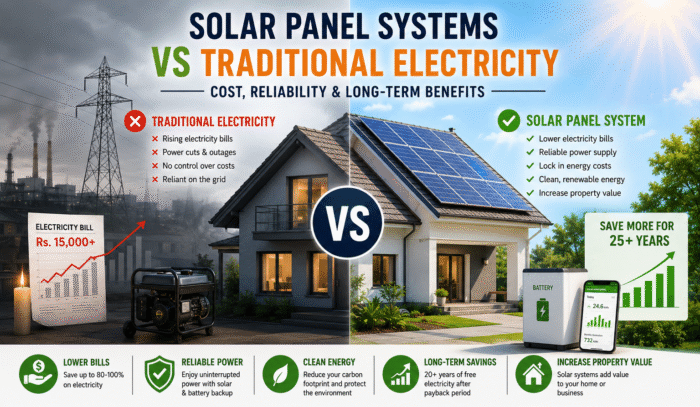
| Best for Sri Lanka | Urban homes | Remote areas | Most homes & businesses |
| Payback Period | 4-6 years | 7-10 years | 5-7 years |
How to Choose the Right Solar Inverter System in Sri Lanka (Step-by-Step)
- Calculate your daily energy consumption (check your CEB bill)
- Assess your location – grid reliability and space for panels/batteries
- Decide your priority – bill savings, backup power, or complete independence
- Check CEB requirements – approved inverter settings and net metering application
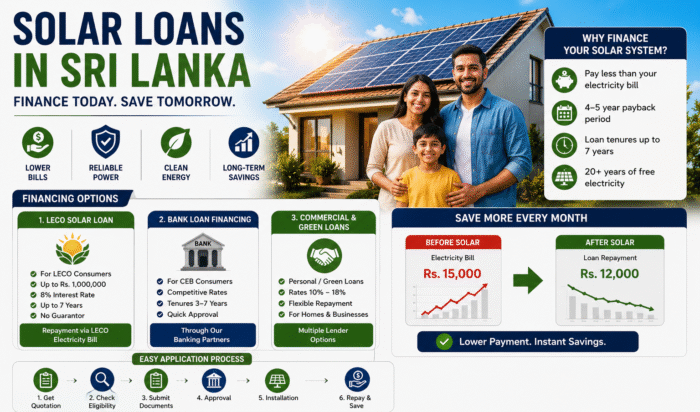
- Budget & ROI – St. Anthony’s Solar offers flexible financing
- Warranty & service – choose brands with local support (10-year inverter warranty common)
Step-by-Step: How a Solar Inverter System Works in Your Home
- Sunlight hits high-efficiency panels (550W monocrystalline)
- DC electricity flows to the solar inverter
- Inverter converts DC → AC and optimizes output via MPPT
- Power first supplies your home appliances
- Excess energy either charges batteries (hybrid/off-grid) or feeds the grid (on-grid/hybrid)
- Smart app shows real-time production, consumption, and savings
St. Anthony’s Solar handles the entire process – from free site survey to CEB approval and 25-year panel performance warranty.
Most Searched Questions About Solar Inverters in Sri Lanka (FAQs)
Q1. How much does a solar inverter cost in Sri Lanka in 2026?
A 5kW on-grid inverter starts around LKR 180,000–250,000. Hybrid models range LKR 350,000–550,000 depending on battery integration.
Q2. Do I need CEB approval for solar inverters?
Yes for on-grid and hybrid systems. St. Anthony’s Solar manages all paperwork.
Q3. Will my solar system work during a power cut?
Only hybrid or off-grid systems with batteries provide backup.
Q4. What is the best solar inverter brand in Sri Lanka?
Top-tier options include German, Austrian, and premium Chinese inverters offered by St. Anthony’s Solar with proven local performance.
Q5. How long do solar inverters last?
10–15 years standard warranty; many last 20+ years with proper maintenance.
Q6. Can I expand my system later?
Hybrid inverters are modular and easily expandable.
Q7. What maintenance do solar inverters need?
Minimal – annual cleaning and monitoring. Dust and heat are the main concerns in Sri Lanka.
Q8. Is net metering still profitable in 2026?
Yes! With current tariffs and export rates, most systems achieve excellent ROI.
Why Choose St. Anthony’s Solar for Your Solar Inverter Needs?
With over 10 years of expertise and the nation’s largest service network, St. Anthony’s Solar delivers world-class solar inverters backed by 25-year panel warranties and 10-year inverter warranties. Whether you need a simple on-grid system to cut bills or a full hybrid setup with battery backup, their team designs custom solutions tailored to Sri Lankan conditions.
From consultation to after-sales support, St. Anthony’s Solar ensures your investment delivers maximum returns and peace of mind.
Ready to go solar?
Visit the solar power experts at St. Anthony’s Solar or contact us today for a free quote and site assessment. Phone: 076 7310 310.
Make the switch to solar inverters today -and enjoy lower bills, reliable power, and a greener Sri Lanka tomorrow.