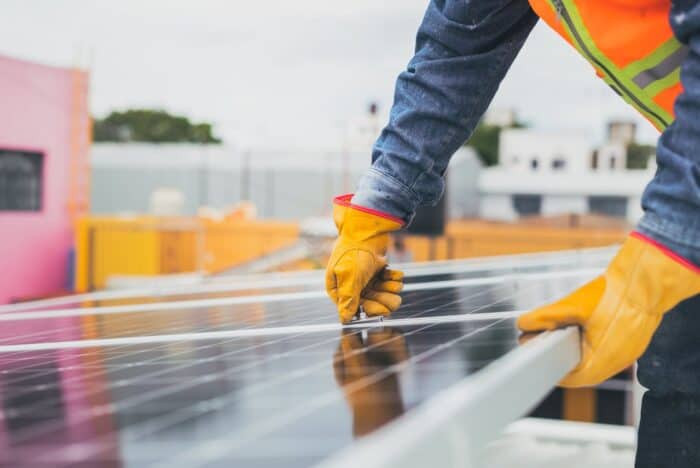
Installing a solar system for homes in Sri Lanka has become one of the smartest long-term investments homeowners can make. With rising electricity tariffs, frequent power instability, and abundant sunlight throughout the year, solar energy provides a reliable and cost-effective alternative to grid electricity.
However, many homeowners have critical questions:
- What size solar system do I need?
- How much does it cost in Sri Lanka?
- How much can I save every month?
- How long does it take to recover the investment?
This comprehensive guide explains everything you need to know about residential solar systems in Sri Lanka, including system sizing, cost estimates, electricity generation, monthly savings, and return on investment (ROI).
Why Solar Systems Are Ideal for Homes in Sri Lanka
Sri Lanka is one of the best countries in the world for solar energy due to its geographic location near the equator.
Average solar radiation in Sri Lanka:
- 5 to 6 peak sunlight hours per day
- Consistent sunlight throughout the year
- Minimal seasonal variation compared to other countries
This allows residential solar systems to generate reliable electricity every day. Key benefits of installing solar at home include lower electricity bills, protection from rising electricity tariffs, energy independence, long-term financial savings, increased property value, and a reduced carbon footprint.
Solar power is not just an environmental decision—it is a financial investment.
How a Residential Solar System Works
A residential solar system converts sunlight into usable electricity using photovoltaic (PV) technology. The main components include:
- Solar Panels: Capture sunlight and generate DC electricity. Typical lifespan: 25–30 years.
- Solar Inverter: Converts DC electricity into the AC electricity used by household appliances. Typical lifespan: 10–15 years.
- Mounting Structure: Supports panels on the roof or ground, ensuring proper tilt and orientation.
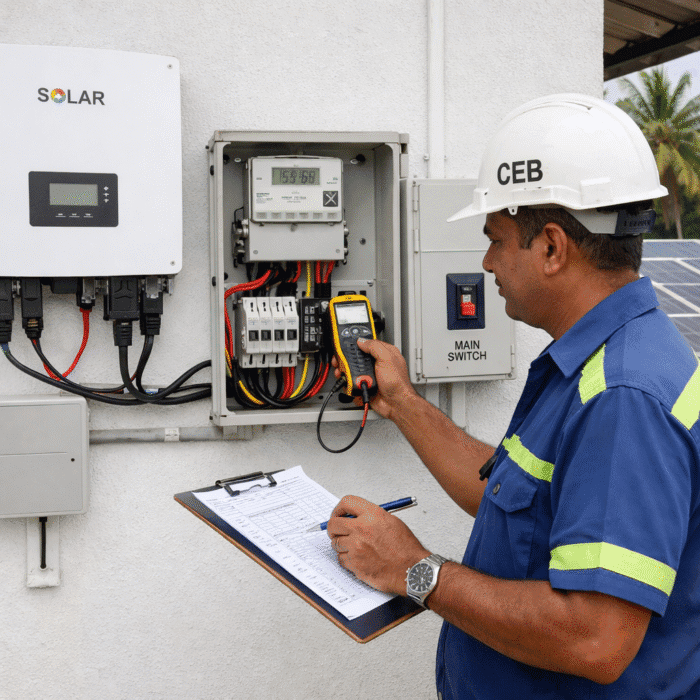
- Net Meter or Net Accounting System: Allows excess electricity to be exported to the national grid so homeowners can receive credits or payments.
- Electrical Wiring and Protection: Ensures safe and efficient system operation.
Types of Home Solar Systems in Sri Lanka
There are three main types of residential solar systems:
On-Grid Solar System
This is the most common and affordable option, connected directly to the national grid.
- Benefits: Lowest cost, no batteries required, maximum ROI, and allows for net metering/accounting. This is the best choice for most homes.
Hybrid Solar System
Includes a battery backup alongside grid connection.
- Benefits: Provides power during grid outages and offers greater energy independence. It comes at a higher initial cost due to the batteries.
Off-Grid Solar System
A completely independent system used primarily in remote areas without grid access. It has the highest cost due to the large battery storage required to run the home 24/7.
How to Calculate Your Solar System Size
Your solar system size depends entirely on your electricity usage. You can easily estimate the required system size using your monthly electricity consumption.
Basic formula: > System size (kW) = Monthly electricity usage (units) ÷ 120
(Note: This formula works well in Sri Lanka due to average solar generation levels.)
Example Calculation:
- Monthly usage: 450 units
- Calculation: 450 ÷ 120 = 3.75 kW
- Recommended system size: 4 kW solar system
Recommended System Size Based on Monthly Electricity Usage
Proper system sizing ensures optimal savings. Here is a practical sizing guide:
| Monthly Usage | Recommended System Size |
| 100 units | 1 kW |
| 200 units | 2 kW |
| 300 units | 3 kW |
| 400 units | 4 kW |
| 500 units | 4–5 kW |
| 600 units | 5–6 kW |
| 800 units | 7–8 kW |
| 1000 units | 8–10 kW |
Costs, Savings, and ROI for Homes in Sri Lanka (2026)
Solar installation cost depends on system size, equipment quality, and installation complexity. On-grid systems remain the most affordable.
Average Residential Solar System Cost
| System Size | Cost Range (LKR) |
| 1 kW | 250,000 – 350,000 |
| 2 kW | 450,000 – 650,000 |
| 3 kW | 650,000 – 900,000 |
| 4 kW | 800,000 – 1,100,000 |
| 5 kW | 950,000 – 1,400,000 |
| 6 kW | 1,200,000 – 1,700,000 |
| 8 kW | 1,600,000 – 2,200,000 |
| 10 kW | 1,800,000 – 2,800,000 |
Monthly Savings and Electricity Generation
Generation depends on sunlight, orientation, and system quality. For example, a 5 kW system typically generates 600–750 units per month.
If the electricity tariff is LKR 50 per unit, a 5 kW system yields:
- Monthly savings: LKR 30,000 – 37,500
- Annual savings: LKR 360,000 – 450,000
Expected Solar Output by System Size
| System Size | Monthly Output |
| 1 kW | 120–150 units |
| 2 kW | 240–300 units |
| 3 kW | 360–450 units |
| 5 kW | 600–750 units |
| 10 kW | 1200–1500 units |
Solar System ROI and Payback Period
Because solar panels last 25–30 years, they provide over two decades of free electricity. The typical payback period in Sri Lanka is 3–6 years.
Example calculation:
- System cost: LKR 1,200,000
- Monthly savings: LKR 32,000 (Annual: LKR 384,000)
- Payback period: 1,200,000 ÷ 384,000 = 3.1 years
Roof Space Requirements and Performance Factors
Roof Space Needed
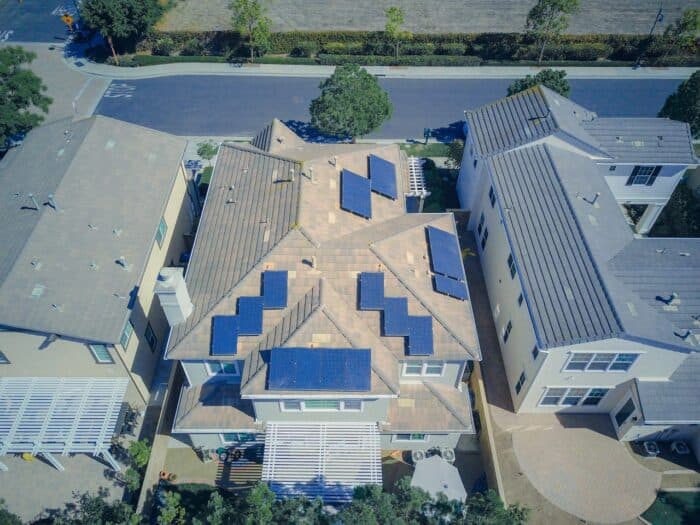
Each kW requires approximately 4–5 square meters of roof space. Most homes have sufficient roof space for their required system size.
| System Size | Roof Space Needed |
| 3 kW | 15 sq meters |
| 5 kW | 25 sq meters |
| 10 kW | 50 sq meters |
Factors That Affect Solar System Performance
- Panel Orientation: The best direction in Sri Lanka is South-facing or Southwest-facing.
- Tilt Angle: The optimal tilt is 5–15 degrees.
- Shade: Shade drastically reduces system performance. Avoid installing panels in shaded areas.
- Equipment Quality: Higher-quality components improve overall efficiency and lifespan.
Sri Lanka’s Solar Grid Connection Schemes
Sri Lanka offers three main solar schemes to benefit homeowners:
- Net Metering: Excess electricity is exported to the grid, and you receive credits to be used later.
- Net Accounting: Excess electricity is sold to the grid, and you receive cash payments. This is the most popular scheme.
- Net Plus: All electricity generated is sold directly to the grid under a separate billing system.
Maintenance, Lifespan, and Additional Benefits
Maintenance Requirements
Solar systems require minimal maintenance. Typical upkeep includes occasional panel cleaning, electrical inspections, and system monitoring. Annual maintenance costs range from LKR 5,000–20,000—very low compared to the savings generated.
Additional Financial and Environmental Benefits
- Property Value: Homes with solar systems are more attractive to buyers and have higher property values.
- Environmental Impact: Solar heavily reduces carbon emissions. For instance, a 5 kW system reduces 4–6 tons of CO₂ annually.
Common Mistakes to Avoid When Installing Solar at Home
Professional installation ensures optimal results. Avoid these common mistakes:
- Installing the wrong system size
- Choosing the lowest-cost installer instead of a reliable, proven provider
- Using low-quality equipment
- Ignoring roof condition prior to installation
- Poor overall system design
Companies such as PureHydro and other experienced solar providers emphasize proper system planning to maximize efficiency and long-term savings.
The Future of Residential Solar in Sri Lanka
Solar adoption is rapidly increasing due to rising electricity costs, government renewable energy goals, improving solar technology, and increasing public awareness. Solar will soon become standard in all modern homes.
Conclusion: Is Solar Worth It for Homes in Sri Lanka?
Yes. Solar is one of the best long-term investments available. Installing a solar system offers substantial financial and energy benefits. With installation costs ranging from LKR 250,000 to LKR 2,800,000 depending on system size, most homeowners recover their investment within 3–6 years.
With Sri Lanka’s excellent sunlight conditions and available government programs, solar provides energy independence, high ROI, and reliable electricity for over 25 years. Proper system sizing, quality equipment, and professional installation ensure maximum safety and return on your investment.
Get Expert Solar Solutions for Your Home
If you’re planning to install a solar system for your home, expert system design and professional installation are required to ensure maximum efficiency, safety, and long-term savings.
Visit: https://stanthonyssolar.lk/