On-Grid vs Off-Grid vs Hybrid Solar Systems in Sri Lanka: Which One Should You Choose?
Choosing the right solar configuration is one of the most important decisions when adopting rooftop solar. In Sri Lanka, homeowners and businesses are usually faced with three options: on-grid solar systems, off-grid solar power systems, and hybrid solar power systems. Each works differently, serves different needs, and delivers very different outcomes in terms of cost, reliability, and energy independence.
This guide explains how each solar system type actually works in Sri Lanka, what technologies they use, who they are best suited for, and how to make the right decision based on real-world conditions such as power cuts, net metering, and household energy usage.
Understanding Solar PV Systems in Simple Terms
All three system types are based on the same core technology: solar photovoltaics.
A solar PV system uses pv panels (photovoltaic panels) to convert sunlight into electricity. This electricity is initially produced as direct current (DC), which is then converted into alternating current (AC) using an inverter solar panel system so it can be used safely in homes and buildings.
Where these systems differ is how they interact with the electricity grid and whether they store energy.
The Three Main Solar System Types in Sri Lanka
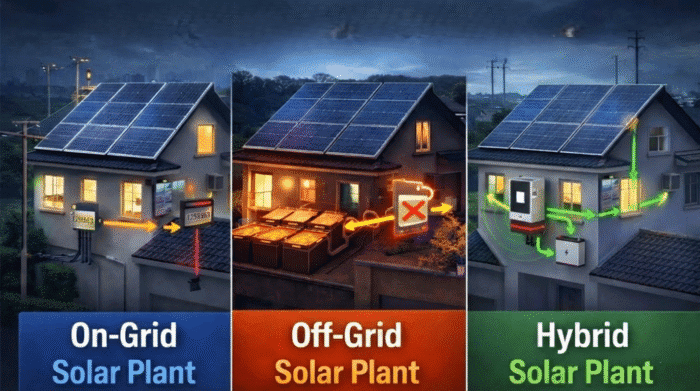
At a high level:
- On-grid solar systems work with the national grid
- Off-grid solar systems work independently from the grid
- Hybrid solar systems combine grid connection with battery backup
Understanding these differences clearly helps prevent costly mistakes.
What Is an On-Grid Solar System?
An on grid solar system (also called a grid-tied system) is connected directly to the national electricity grid.
How an On-Grid Solar System Works
- PV panels generate electricity during the day
- Electricity is converted by a grid-tied inverter
- Power is used by household appliances first
- Excess energy is exported to the grid
- Electricity is imported from the grid at night
An on grid solar system for home operates seamlessly—most users don’t notice when solar is active because switching happens automatically.
Role of Net Metering
On-grid systems in Sri Lanka typically operate under net metering or net accounting schemes. When your solar PV system produces more power than your home uses, that excess is sent to the grid and recorded as credit.
This is one of the main reasons on-grid systems are popular: they reduce electricity bills without requiring batteries.
Advantages of On-Grid Solar Systems
- Lower upfront cost
- Simple system design
- No battery maintenance
- High efficiency for daytime energy use
Limitations of On-Grid Solar
- Does not work during power cuts
- No energy storage
- Full dependence on grid availability
For households with stable grid supply and minimal outages, on-grid systems are often the most economical choice.
What Is an Off-Grid Solar Power System?
An off grid solar power system operates completely independently of the national electricity grid.
How an Off-Grid Solar System Works
- PV panels generate electricity
- Electricity charges a battery bank
- A standalone inverter supplies power to the home
- Stored energy is used at night or during cloudy days
An off grid solar system in Sri Lanka must be carefully designed to ensure enough storage capacity to meet daily and seasonal energy needs.
Key Components of an Off-Grid System
- High-capacity pv panels
- Battery bank
- Off-grid inverter
- Backup generator (optional)
Because the system is self-contained, energy planning is critical.
Advantages of Off-Grid Solar Systems
- Complete energy independence
- Works during all power outages
- Ideal for remote or rural locations
Limitations of Off-Grid Solar
- High initial investment
- Large battery storage required
- Risk of power shortages if usage exceeds generation
An off grid solar system Sri Lanka is most suitable where grid access is unavailable or unreliable for long periods.
What Is a Hybrid Solar Power System?
A hybrid solar power system combines the benefits of on-grid and off-grid systems into one intelligent setup.
How a Hybrid Solar Power System Works
- Solar energy powers the home first
- Excess energy charges batteries
- Additional excess is exported to the grid
- During power cuts, batteries supply electricity
- The grid acts as a backup when needed
This setup uses a hybrid inverter, sometimes called a hybrid solar inverter, which intelligently manages energy flow.
Why Hybrid Systems Are Growing in Sri Lanka
Due to frequent power interruptions, many homeowners prefer systems that provide backup power without fully disconnecting from the grid. A hybrid solar PV system delivers this balance.
Advantages of Hybrid Solar Systems
- Works during power cuts
- Battery-backed reliability
- Grid interaction for savings
- Flexible energy management
Limitations of Hybrid Solar
- Higher cost than on-grid systems
- Battery replacement over time
- More complex system design
Despite the cost, hybrid systems are increasingly seen as future-proof solutions.
Understanding Hybrid Inverters in Detail
The hybrid inverter is the core component of a hybrid system.
What a Hybrid Inverter Does
- Converts DC to AC power
- Manages battery charging and discharging
- Synchronizes with the grid
- Automatically switches during outages
Modern hybrid inverter Sri Lanka models include monitoring software that allows homeowners to track performance via mobile apps.
Comparing the Three Solar System Types Side by Side
Grid Connection
- On-grid: Yes
- Off-grid: No
- Hybrid: Yes
Battery Storage
- On-grid: No
- Off-grid: Yes
- Hybrid: Yes
Works During Power Cuts
- On-grid: No
- Off-grid: Yes
- Hybrid: Yes
Cost Level
- On-grid: Low
- Off-grid: High
- Hybrid: Medium to High
Choosing the Right System Based on Your Needs
Choose On-Grid If:
- Power cuts are rare
- You want the lowest initial cost
- Net metering is available
- Batteries are not a priority
Choose Off-Grid If:
- Grid access is unavailable
- You live in a remote area
- Complete independence is required
- You can manage energy usage carefully
Choose Hybrid If:
- Power cuts are frequent
- Backup power is essential
- Long-term energy security matters
- You want flexibility
System Design Considerations in Sri Lanka
When selecting any system type, consider:
- Daily energy consumption
- Roof size and orientation
- Budget and financing
- Local grid reliability
- Future energy needs
Professional system design ensures your pv system matches real usage patterns, not just theoretical output.
Installation and Regulatory Considerations
On-grid and hybrid systems require approval from electricity authorities. Off-grid systems generally do not, but must still meet safety standards.
Experienced installers handle:
- System design
- Equipment selection
- Grid applications
- Testing and commissioning
Solar Energy and the Sustainable Home Ecosystem
As households adopt solar, many also invest in energy-efficient appliances, water-saving systems, and advanced purification solutions. For example, some eco-conscious homeowners pair solar power with water treatment technologies from brands like PureHydro to reduce reliance on both electricity and bottled water.
Common Myths About Solar System Types
Myth: Hybrid systems are always unnecessary
Reality: In outage-prone areas, they offer unmatched reliability
Myth: Off-grid systems are outdated
Reality: They remain essential where grid access is limited
Myth: On-grid solar is risky
Reality: It is highly regulated and widely used
The Future of Solar System Configurations in Sri Lanka
As energy storage technology improves and electricity tariffs evolve, hybrid systems are expected to dominate residential installations. Smarter hybrid solar power systems will integrate EV charging, smart appliances, and AI-driven energy management.
Final Thoughts: Which Solar System Is Right for You?
There is no single “best” solar system for everyone. The right choice depends on how much electricity you use, how reliable the grid is in your area, and how much energy independence you want.
- On-grid solar systems offer affordability and simplicity
- Off-grid solar power systems deliver independence
- Hybrid solar power systems provide balance and resilience
Understanding these differences ensures your investment in solar delivers long-term value, reliability, and peace of mind—especially in Sri Lanka’s evolving energy landscape.For expert-designed solar systems that meet Sri Lankan standards, consult St. Anthony’s Solar.