With rising electricity costs and increasing environmental awareness, Solar Systems in Sri Lanka are becoming a smart investment for homeowners and businesses. However, before installation begins, understanding the Approval Process for Solar Systems is essential to ensure a smooth, legal, and efficient setup.
This detailed guide explains the step-by-step approval process, required documents, timelines, and expert tips to help you get started without delays.
Why Approval is Mandatory for Solar Systems in Sri Lanka
Installing Solar Systems is not just about placing panels on your roof—it involves integrating with the national power grid. Government approval is required to:
- Ensure electrical safety standards
- Maintain grid stability
- Enable net metering or net accounting benefits
- Comply with national renewable energy policies
Without proper approval, your system may not be connected to the grid or eligible for financial returns.
Types of Solar Systems That Require Approval
Understanding your system type helps you prepare for the right approval process.
On-Grid Solar Systems
- Connected to the national grid
- Most widely used in Sri Lanka
- Requires full approval and inspection
Off-Grid Solar Systems
- Independent systems (no grid connection)
- Minimal or no approval required
Hybrid Solar Systems
- Combines grid connection with battery storage
- Requires approval similar to on-grid systems
Step-by-Step Approval Process for Solar Systems
Here’s a complete breakdown of the Approval Process for Solar Systems in Sri Lanka:
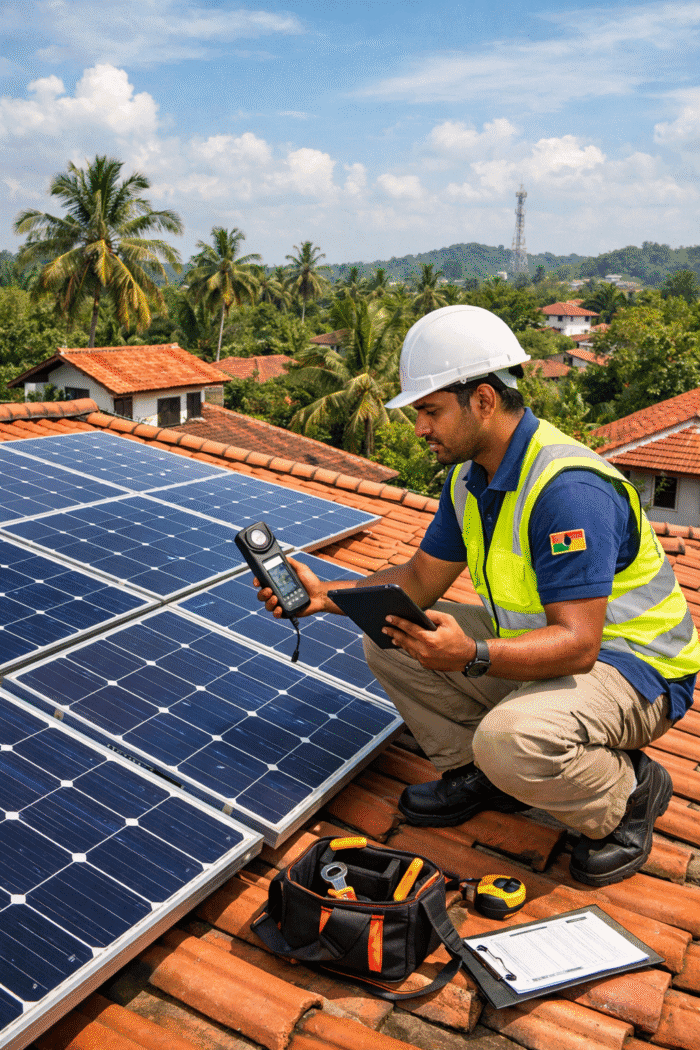
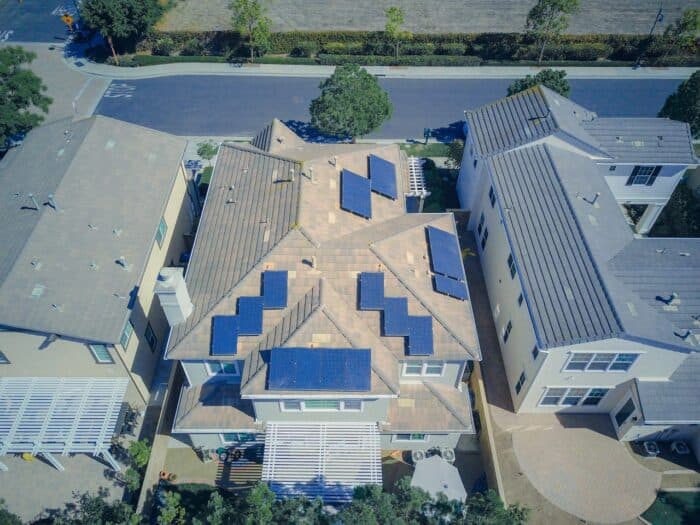
Description: Technician inspecting a residential rooftop with solar panels, using tools or tablet for measurements.
Purpose: Represents the first step (site assessment & consultation) in the approval process.
Alt Text: Technician inspecting rooftop for solar system installation in Sri Lanka
Title: Solar Site Inspection for System Approval
Step 1: Consultation & Site Assessment
The first step is to consult a professional solar provider like St. Anthony`s Solar, who specializes in Solar Systems in Sri Lanka.
During this stage:
- Roof condition and direction are evaluated
- Electricity usage is analyzed
- System size is recommended
You can begin this process by reaching out through their Solar Systems in Sri Lanka consultation page, where experts guide you on the best solution for your needs.
Step 2: System Design & Proposal Preparation
After the inspection:
- A customized solar system layout is created
- Equipment specifications are selected
- Expected energy generation is calculated
This proposal is carefully prepared to meet utility provider requirements, increasing approval success rates.
Step 3: Application Submission
Your service provider submits the application to:
- Ceylon Electricity Board (CEB), or
- Lanka Electricity Company (LECO)
This step includes submitting all technical and personal documents required for approval.
Step 4: Technical Evaluation
Authorities review:
- Electrical system design
- Safety compliance
- Grid compatibility
They may request:
- Additional clarifications
- Minor design adjustments
Working with experts in Solar Systems services ensures this step is handled efficiently and without errors.
Step 5: Approval & Agreement Signing
Once approved:
- A connection agreement is issued
- Net metering or net accounting scheme is selected
- Terms of electricity export are finalized
Step 6: Installation Process
After approval:
- Installation is carried out by certified technicians
- High-quality solar panels and inverters are installed
- System safety is tested
Professional installation services from Solar Systems in Sri Lanka providers ensure long-term performance and compliance.
Step 7: Inspection & Grid Connection
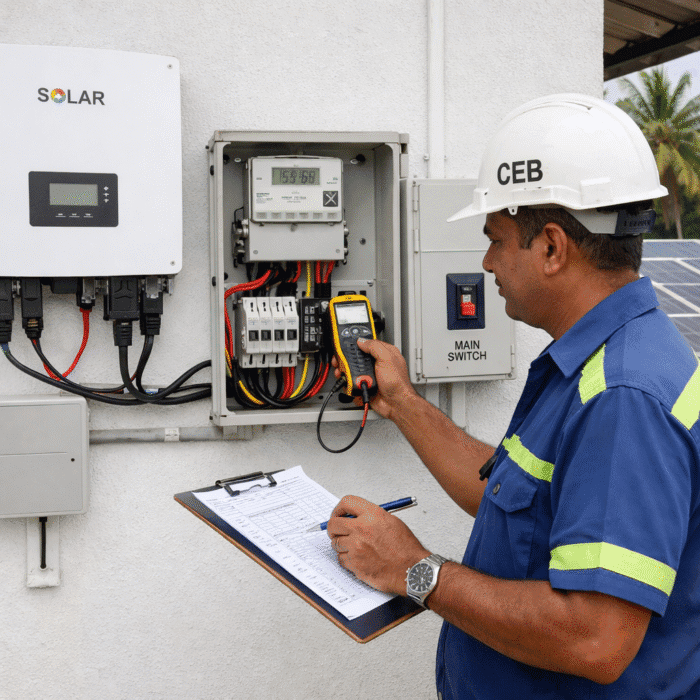
Description: Electrical engineer or utility officer checking inverter, meter box, or grid connection panel.
Purpose: Highlights the final inspection and grid connection stage of the approval process.
Alt Text: Solar system inspection and grid connection by utility provider Sri Lanka
Title: Final Inspection and Grid Connection for Solar Systems
Final steps include:
- Inspection by utility authorities
- Performance verification
- Activation of grid connection
Once completed, your system is ready to generate and save energy.
Timeline for Solar System Approval
The approval timeline depends on system size, documentation accuracy, and utility processing speed.
Estimated Timeline
| Stage | Duration |
| Consultation & design | 3–7 days |
| Application submission | 1–3 days |
| Technical review | 2–4 weeks |
| Approval & agreement | 1–2 weeks |
| Installation & connection | 1–2 weeks |
Total Duration:
👉 Approximately 4 to 8 weeks
Documents Required for Approval
To complete the Approval Process for Solar Systems, you’ll need:
Personal Documents
- National ID or Passport copy
- Proof of property ownership
Electricity Details
- Latest electricity bill
- Account number
Technical Documents
- Solar system design plan
- Equipment certifications
- Inverter and panel specifications
Application Forms
- Utility provider forms
- Net metering/net accounting agreement
Having a professional provider like St. Anthony`s Solar manage documentation reduces errors and speeds up approval.
Common Challenges & How to Avoid Them
Incomplete Applications
Missing documents are the #1 cause of delays.
✔ Solution: Work with experienced providers in Solar Systems in Sri Lanka
Design Errors
Incorrect system sizing or layout can lead to rejection.
✔ Solution: Use certified solar engineers
Delayed Utility Response
Processing times may vary.
✔ Solution: Regular follow-ups and proper submission
Non-Compliant Equipment
Using unapproved components can delay approval.
✔ Solution: Choose trusted Solar Systems services providers
Benefits of Completing the Approval Process
Financial Savings
- Lower electricity bills
- Earn credits through net metering
Legal Protection
- Avoid penalties or disconnection
Increased Property Value
- Approved systems add resale value
Environmental Benefits
- Reduce reliance on fossil fuels
FAQs About Solar Systems Approval in Sri Lanka
1. Is approval required for all solar systems?
Approval is mandatory for grid-connected systems. Off-grid systems may not require full approval but still need safety compliance.
2. How long does the approval process take?
Typically between 4 to 8 weeks, but delays can occur if documents are incomplete or corrections are required.
3. Can I apply for approval myself?
Yes, but it is highly recommended to use a professional provider offering Solar Systems services, as they handle technical documentation and reduce errors.
4. What is net metering and how does it work?
Net metering allows you to send excess electricity generated by your solar system back to the grid. This is credited against your electricity bill.
5. What is the difference between net metering and net accounting?
- Net metering: Energy units are offset directly
- Net accounting: Energy is purchased at a fixed rate
Your provider will help you choose the best option.
6. What happens if my application is rejected?
If rejected:
- You’ll receive feedback from the utility provider
- Corrections must be made
- Application can be resubmitted
Working with experts in Solar Systems in Sri Lanka minimizes rejection risks.
7. Do I need to be present during inspections?
Not always, but it’s recommended. Your solar provider usually handles inspections on your behalf.
8. Are there government incentives for solar systems?
Yes, Sri Lanka offers schemes like net metering and net accounting to encourage renewable energy adoption.
9. How much capacity solar system can I install?
This depends on:
- Your electricity usage
- Roof space
- Utility provider regulations
A professional consultation helps determine the ideal system size.
10. Can businesses follow the same approval process?
Yes, but commercial systems may require additional documentation and larger-scale approvals.
Most Searched Questions About Solar Systems in Sri Lanka
Is solar energy a good investment in Sri Lanka?
Yes, due to rising electricity costs and strong sunlight availability.
How long do solar panels last?
Most solar panels last 20–25 years with minimal maintenance.
Do solar systems work during power cuts?
- On-grid systems: No (unless hybrid)
- Hybrid systems: Yes (with batteries)
How do I start installing solar systems?
The best way is to consult a trusted provider offering Solar Systems in Sri Lanka consultation services, who will guide you through design, approval, and installation.
Final Thoughts
The Approval Process for Solar Systems in Sri Lanka may seem complex, but with the right guidance, it becomes straightforward and efficient. From documentation to grid connection, every step is essential for ensuring safety, compliance, and long-term savings.
Choosing an experienced provider like St. Anthony`s Solar helps you avoid delays, reduce paperwork stress, and complete your solar project successfully.If you’re planning to invest in Solar Systems in Sri Lanka, now is the perfect time to take the first step toward energy independence.