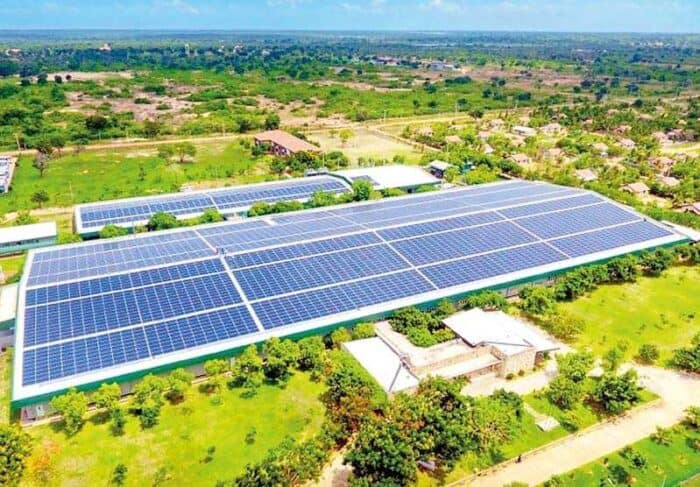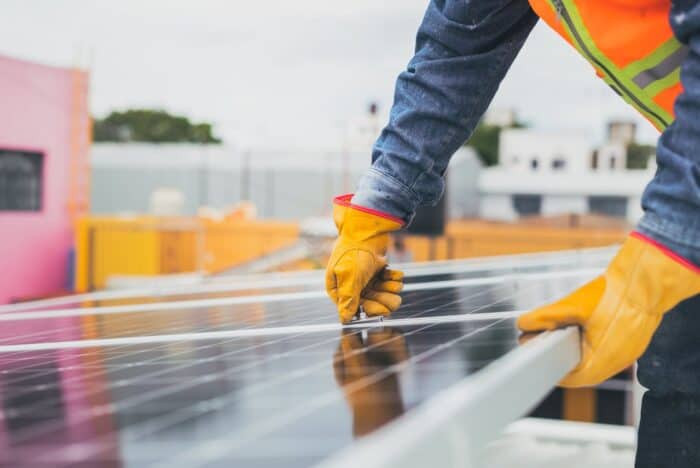
Solar energy is rapidly becoming one of the most practical and cost-effective energy solutions in Sri Lanka. With rising electricity tariffs, frequent grid instability, and strong government support through net metering and net accounting schemes, more homeowners and businesses are investing in solar power systems.
However, one of the most important questions people ask is: “How much does it cost to install a solar system in Sri Lanka, and how long does it take to recover the investment?”
This detailed 2026 guide explains solar system costs, pricing factors, return on investment (ROI), payback periods, and what you can realistically expect when installing solar in Sri Lanka.
Why Solar Power Is Growing Fast in Sri Lanka
Sri Lanka is geographically well-positioned for solar energy. The country receives strong sunlight throughout the year, averaging 5–6 peak sun hours per day, which makes solar systems highly productive.
Key reasons why solar adoption is increasing rapidly:
- Rising electricity tariffs from the national grid
- Long-term savings on energy bills
- Government incentives (Net Metering, Net Accounting, Net Plus)
- Energy independence and protection from tariff increases
- Environmental sustainability and reduced carbon footprint
- Increasing reliability and efficiency of solar technology
Solar is no longer considered a luxury—it is now a smart financial investment.
Average Cost of Solar System Installation in Sri Lanka (2026)
Solar system prices vary depending on system size, equipment quality, installation complexity, and brand. Below is the updated average price range in Sri Lanka for 2026:
| System Size | Suitable For | Average Cost (LKR) | Monthly Savings (LKR) | Payback Period |
| 1 kW | Very small homes | 250,000 – 350,000 | 4,000 – 7,000 | 5–7 years |
| 2 kW | Small households | 450,000 – 650,000 | 8,000 – 14,000 | 4–6 years |
| 3 kW | Average homes | 650,000 – 900,000 | 12,000 – 20,000 | 4–6 years |
| 5 kW | Medium homes | 950,000 – 1,400,000 | 20,000 – 35,000 | 3–5 years |
| 10 kW | Large homes/businesses | 1,800,000 – 2,800,000 | 40,000 – 70,000 | 3–5 years |
Note: These are general estimates based on market averages. Actual costs will depend on equipment quality, installation conditions, and the specific system type.
Cost Per Watt Estimates
Another useful metric for evaluating price is the cost per watt.
- Standard Quality: LKR 180 – 280 per watt
- Premium Systems: LKR 280 – 350 per watt
Example: A typical 5 kW residential system (5000 watts) at an average of LKR 220 per watt would have a total installation cost of approximately LKR 1,100,000.
Major Factors That Affect Solar System Cost
Solar system pricing depends on several technical and practical factors:
1. Type of Solar System
There are three main system types:
- On-Grid Solar System (LKR 180,000 – 280,000 per kW): The most affordable and common option for homes. It connects to the national grid, requires no batteries, and utilizes net accounting.
- Hybrid Solar System (LKR 300,000 – 500,000 per kW): Includes batteries for backup to provide power during grid outages. The batteries increase the overall installation cost.
- Off-Grid Solar System (LKR 400,000 – 700,000 per kW): A completely independent system with large battery banks. Used primarily in remote areas without grid access, making it the most expensive option.
2. Equipment Quality (Panels & Inverters)
High-quality panels cost more upfront but offer better performance, higher efficiency, and a longer lifespan (25–30 years), providing better long-term ROI. Similarly, a high-quality inverter (which converts solar energy into usable AC electricity) offers better safety and a 10–15 year lifespan.
3. Installation and Mounting Complexity
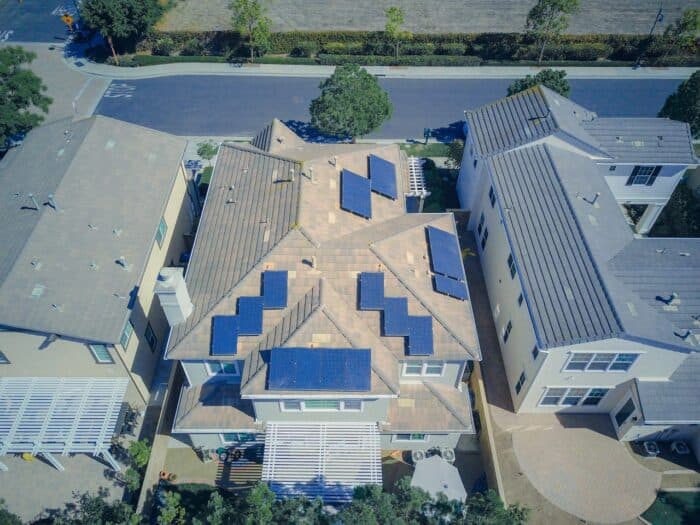
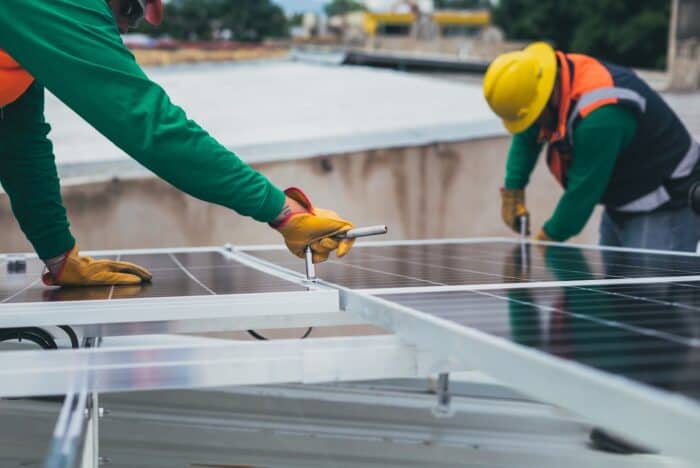
Roof-mounted systems are generally cheaper than ground-mounted systems, which require additional structural support. Complex installations increase labor costs based on roof type, roof angle, building height, wiring complexity, and distance from the distribution board.
4. Government Approvals and Grid Connection
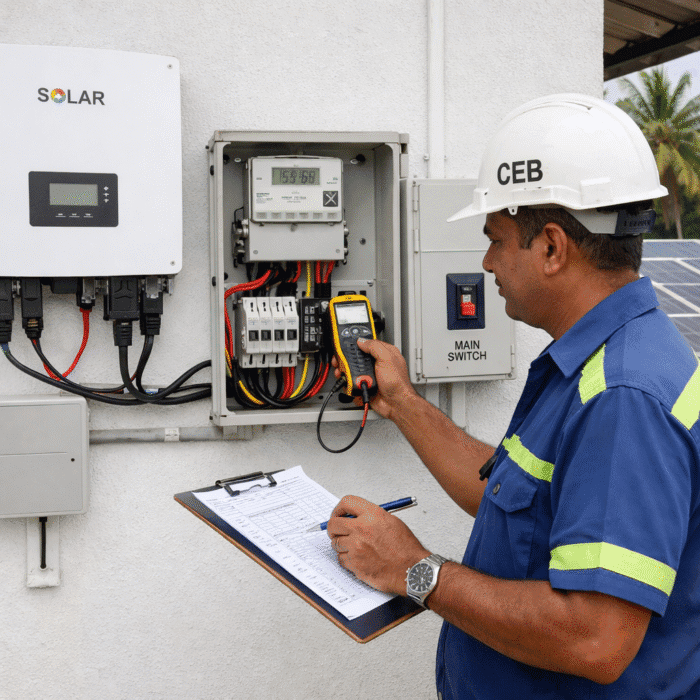
Grid-tied systems require approval from the electricity board. Costs may include application processing fees, meter upgrades, and grid connection setup. Most reputable installers include these fees in their package.
Electricity Generation, Savings, and ROI
Solar provides one of the best investment returns available for homeowners, often yielding a 15% – 30% annual return—significantly higher than most bank fixed deposits.
Expected Monthly Output and Savings
Generation depends heavily on system size and sunlight. Sri Lanka’s strong sunlight makes these systems highly productive:
| System Size | Daily Output | Monthly Output |
| 1 kW | 4–5 units | 120–150 units |
| 3 kW | 12–15 units | 360–450 units |
| 5 kW | 20–25 units | 600–750 units |
| 10 kW | 40–50 units | 1200–1500 units |
Savings Example: If a 5 kW system generates 700 units monthly and the electricity rate is LKR 50 per unit, your savings would be LKR 35,000 per month (or LKR 420,000 annually).
Example ROI & Payback Calculation (5 kW System)
The payback period is the time required to recover your installation cost through savings. For on-grid systems, this is typically 3 to 6 years.
- Installation cost: LKR 1,200,000
- Monthly savings: LKR 30,000 (LKR 360,000 annually)
- Payback period: 1,200,000 ÷ 360,000 = 3.3 years
Since solar panels last 25–30 years, the remaining 20+ years provide pure, free electricity. Total lifetime savings can easily exceed LKR 7,000,000.
Sizing Your Solar System
Proper sizing ensures maximum ROI. Here are typical recommendations for Sri Lankan homes based on average monthly bills:
| Monthly Bill | Recommended System |
| LKR 5,000 | 1–2 kW |
| LKR 10,000 | 2–3 kW |
| LKR 20,000 | 3–5 kW |
| LKR 40,000+ | 5–10 kW |
Note: Commercial systems often cost less per watt due to scale. Businesses also benefit more from higher electricity usage, often resulting in an even faster ROI.
Sri Lanka’s Solar Grid Connection Schemes
Sri Lanka offers three solar schemes to integrate your system with the national grid:
- Net Metering: Excess electricity is exported to the grid, and you receive credits that can be used later.
- Net Accounting: Excess electricity is sold to the grid, and you receive direct payments or financial credits. This is the most popular scheme in Sri Lanka.
- Net Plus: You sell all generated electricity to the grid under a completely separate billing system.
Long-Term Ownership: Maintenance, Lifespan, and Hidden Costs
Solar systems require minimal maintenance, typically limited to panel cleaning, periodic inspections, and electrical safety checks.
- Annual Maintenance Cost: LKR 5,000 – 20,000 (very low compared to your savings).
- System Lifespan: Panels last 25–30 years, while inverters last 10–15 years.
- Hidden Costs: The main future costs to plan for are inverter replacement (after 10–15 years) and battery replacement (only if you have a hybrid or off-grid system). On-grid systems have the lowest long-term maintenance costs.
Additional Benefits of Going Solar
- Financial Security: Solar increases property value. Homes with solar systems are more attractive to buyers. It also locks in your energy rates, protecting you against future electricity price hikes.
- Environmental Impact: Solar heavily reduces carbon emissions, supporting Sri Lanka’s renewable energy goals. A single 5 kW system reduces 4–6 tons of CO₂ annually.
Common Mistakes That Increase Solar Cost
To maximize your investment, avoid these common pitfalls:
- Choosing the cheapest installer instead of a reliable, proven provider
- Installing the wrong system size for your usage
- Using low-quality components to save upfront cash
- Ignoring roof conditions before installation
- Failing to calculate your long-term ROI properly
Conclusion: Is Solar Worth It in Sri Lanka in 2026?
Yes, solar is one of the absolute best investments available today. The cost of installing a solar system in Sri Lanka in 2026 ranges from approximately LKR 250,000 to LKR 2,800,000 depending on system size and type.
While the upfront cost may seem high, the long-term financial benefits are substantial. Most systems recover their investment within 3 to 6 years and continue generating free electricity for decades. With rising electricity costs, strong sunlight conditions, and government support, solar power offers unparalleled financial and energy security.
Proper system design, quality components, and professional installation are essential to maximize ROI, performance, and lifespan.
Professional Solar Installation in Sri Lanka
If you are considering installing a solar system, working with experienced professionals ensures maximum efficiency, safety, and return on investment.
Visit: https://stanthonyssolar.lk/